Often while reading musical reviews or discussions of Ilaiyaraaja (or any genre of music that evolved in the past 50 years for that matter) a popular 'hip' word that one comes across is Chord. While a formal definition or a technical description of that word is available all over the internet, you are expected to be musically 'educated' or at least be aware of the basic anatomy of music to understand those references. Getting more confused, you would usually run for cover to your flamboyant 'expert' next door on the internet. Since he is often throwing this fancy word at you and proclaims to no end that "Wow..What Superb Chords..", you ask him "What exactly is this 'chord' thing? Can you pin point?" or "I am terrified by these Major 7th or minor 9th chords that you mentioned? what are they?", you will most likely see faces that resemble a rabbit caught under the headlamps midway down the road and receive "Hee Hee... Oh.. Adhuva..!!" as the answer.
Many years ago as a novice Carnatic initiated when I started hearing these terms, at least that's the response I received from the umpteen number of guys whom I approached thinking that they were 'Genius' (because of the way how they presented themselves and fooled around innocent people with their Jargon laden talks)
That was the time when I was scared to death by the western classical music in general and the concept of Chords in particular.. With no reliable guidance, with no internet and with no means to practice, all I had was Raaja's songs and loads of determination.. The quality of music tracks then was not of as much crystal clear quality as today, nor did I had these super gadgets of "bass boosting" players or "noise reduction" headphones or "rip off" softwares to eliminate unwanted tracks and just listen to the sound you want in isolation. With a worn-out 2 in one cassette player (which, to copy the popular comical Tamil Adage - would not even fetch me any date fruits!!) and with my ears pressed against its speakers in a manner that would put water tight Swiss watches to shame, I would rewind any given Raaja song at least a hundred times just to play back phrases of two seconds again and again until that exotic chord was fished out of the abyss from deep beneath the vocals and rhythm and the recording noise..
I had many such Raaja songs that served as personal companions to overcome my Chordophobia" :-) The lesser known "Vaanengum Thanga Veen Meengal" from the movie 'Moondram Pirai' is one such song..
As a beginner, You just have to listen to the prelude of this song to get your first direct rendezvous with the Chords..
What you keep hearing in the Prelude of this song until the Flute starts are all nothing but chords.. (Well, the chords continue in the background after the flute starts as well.. but in the first few bars you hear pure unadulterated sound of how a chord feels)
(I already used a term called 'BAR'.. Lets assume a person with little technical background of music hears this song. To initiate him/ her as well as to bolster everyone's basics, lets proceed using some simple non-technical words; So I split this post into two halfs.. Beginner's lounge is the main blog post and I leave the 'technical' stuff separately on the Appendix so that the main post remains lucid)
Part I - Chords For Dummies: Stage 1: Identify a 'Bar'
The song starts with plain guitar sound played periodically..That is, in the prelude of this song, if you simply start counting 1 2 3 4 along with the song's speed, you will here this. As you go on and hear the prelude you will also realize that there is a repeating pattern to this guitar sound.. And you will 'feel' this repetition involuntarily after every 4 counts..
Hearing that clip again you can recap to be sure that what you heard lasted for 4 counts. This is called One Bar, or rather this lasted for the duration of one Bar. (Please note that a Bar doesn't always last for 4 counts universally in all songs. Songs with 3 counts, 5 Counts, 6 counts and 7 Counts bar are also common in Indian/ World music, although not as common as 4 count based Bars.) Exercise 1: Listen to this prelude bit. How Many Bars did you listen?
Stage 2: How does a given Chord Actually 'sound'?
Lets take the same reference bit used for illustration of stage 1. In this one bar of music, you heard a SAME guitar sound through out (although on your 4th count you heard two sounds played fastly. But Lets ignore how that 4th count was divided for the moment)
What you just heard is nothing but a MAJOR CHORD played each time when you counted 1 or 2 or 3 or (the two quick sounds on) 4 . This is an example in isolation, of how a given Chord 'Sounds'.. (a given major chord in this case) Exercise 2: Listen to this famous song. Except for the Janaki's voice, what else did you notice in the background?
Stage 2b: Something Extra Having known how a chord actually sounds, now lets go to the next challenge. That is to identify a slightly more complex 'sound'. "Vaanengum" was the song that helped me grasp the concept of Major 7th chords.. So I would like to continue with it for the illustration..
(For your ready reference, here is the the First bar again.) Now you can already notice that when the second bar starts, the 'sound' of music (!) slightly changed.
Second bar = counts 5 + 6 + 7 + 8 = Guitar in the same PATTERN as the 1st bar.. but the SOUND OF THE CHORD IS DIFFERENT
Agreed..?
What you just heard during the counts 5 or 6 or 7 or 8 is nothing but a MAJOR 7th CHORD..
So dear readers, again as I noted before, the objective here is not to get you technically savvy of a Major 7th chord's anatomy. But just to enable you to listen to a (relatively) 'special' type of chord in isolation. That's all.
Mini coffee break: So now Raaja conducts a revision to you so that you can understand doubly for sure what you have learnt now .. Because the whole stuff is neatly repeated for you..
So here are the first 4 bars of this mystical song. You have already mastered the first 2 bars. Third Bar = same as First bar (Feel the sound of a chord.. note where the bar ends) Fourth bar = Same as Second bar (You started a new beat cycle now.. What you are hearing is a relatively special chord); Exercise 3: Hear to this bit. (This is the prelude of the song "Kiss Me" from the band 'Six pence none the richer') Please focus on the first two bars. What is the similarity that you noticed with the "Vaanengum" Song? Additional Q: How many bars did you listen now ? ;-)
Closing Note: I want to close by saying that, its very easy to learn the concept of chords just by following Raaja's songs.. No other source is needed.. I for one am eternally thankful to Raaja for this..
I am still scared to death by these concepts and by no means capable of dissecting and analyzing each and every chord of Raaja's songs..But now the difference is that at least I know 'what' I am scared off.. I know the face of this mysterious force, as opposed to get chickened out by the fear of the unknown..
I feel this post's objective is met if you also sign off with the same feeling..
With Love Vicky
PS: For the 'Key' of all exercises, refer to the bottom of this post.. If you got them right please pat yourself at the back and of course please do let me know how you fared.
Appendix - An inside view: This is more of an 'Absolute' interpretation of the samples used so that the musically initiated readers can take home more. Please don't bother yourself with it if you think its too much of information.
1. The First bar of Vaanengum is actually a F# Major chord. (To be specific, one can feel this chord already relates to the Aadhara Shruthi of the song.. so this chord is nothing but the the Root major of the song.. i.e., the song's key signature is F#). To be more technically correct its played with the omission of the Major third (i.e., A#) on one track and with the inversion of "5 + 1 + 3" (instead of "1+3+5") in another faint track. The bass is played on the alternating half count and is touching the root note F#.
2. The Second bar of Vaanengum is actually the M7th of the ROOT. i.e., its the F# Major 7th chord which in turn is nothing but the F# Major chord + its 7th note on the major scale which is 'F'. (Major 7ths are also noted as M7th for simplification). As a matter of fact the prominent chord sound that you heard in the bar appear more like the minor triad of the Major Third (i.e., A# minor). Its the bass which still anchors at F# which reassures the final Major 7th delivery (i.e., Bass of F# note + the A# minor traid = F# Major 7th)
(Extended) Stage 3 : Chord progressions:
Now lets go to the next step called CHORD PROGRESSION, which is not exactly worth loosing your sleep right now if you are a beginner. On the other hand, now that you know how a chord sounds, you may still follow this section to merely know the "Changing of Chords" in a bar/ set of bars.
Fifth Bar = G#m G#m G#m F#/C# = minor Triad of the major second (i.e., G# minor traid for 3 counts) and the root F# major on the last count of this bar. (Please note that the last F# major is notated as F#/C# since its played with the inversion of 5+1+3 suggesting that its F# major chord played with the inversion of bass note as C#) . So this is Second Progression Down
Sixth Bar = B B B C# = Perfect Major fourth on first 3 counts and perfect Major 5th on the last count.. So right from the beginning of prelude the progression can be (roughly) summarized as: F# - G#m - F# (With the emphasize on A#) - B - C# . This is a lucid Fifth Progression UP that loops back to the root when the flute starts..
This is relatively a heavy topic.. So lets park it for now..
Exercise 2: Chords.. Chords.. மேலும் Chords:-) (To be exact, the chords that you heard are of the sequence: Am F A| A Dm - F|Em G C Am|F E Am||)
Exercise 3: The similarity between Vaanengum and Kiss Me is that: First Bar = Root Major chord Second Bar = Root Major 7th chord i.e., the chords of the opening two bars are of same make. Even though the key signature of both the songs is different (Vaanengum is F# and Kiss me is D), similarity can be clearly felt in respective 'relative' descents. Kiss Me's progression is: Root - Major7th - 7th - Major 7th (i.e., D - DM7th - D7th - DM7th). So if this helped you to make the 'connection' and 'receive' the 'sound' of a major chord and its major seventh together, then you cracked it.. Additional Q: There were 8 bars in that original Exercise 3 question.
Note: we discussed about just the Major7th in this post. We didn't touch upon the dominant seventh (a.k.a 'THE' 7th) type of chords (that I mentioned in Kiss Me's progression); There are various types of chords and each of them has a distinct character. We just touched upon two (popular) variety. Thats all.. If there is enough interest, lets see if we can extend this exercise to each of the known types using Raaja's songs.
An Article that I wrote for the online Tamil magazine Solvanam(with the title "இளையராஜாவுடன் ஒரு ரயில் பயணம்" or "A Train Journey With Ilaiyaraaja") can be found here.
The irrelevant background on why I treat this to be a credible personal milestone can be read here.
My apologies to the readers who cannot read Tamil. I promise to translate this article in the next available opportunity and post it below. With Love Vicky Aug 7th
======================================================================== Update: 14th Aug As Promised, here is that translation. This is devoid of the Tamil Verses and cohesive sentences that I used in the original. Honestly I feel that this translation is not doing enough justice to the original. Nevertheless this still gives an idea of what I was trying to say to my non-Tamil readers.
A Train Journey with Ilaiyaraaja
In Tamil grammer, there is a technique known as 'Ani Illakkanam' (ornamentation?). This is often used by the poets to enhance the lyrical beauty (of both the word constructs as well as their meaning). I still vividly recollect all such different 'Anis' from my school days. Out of these, my favorite Ani is the one where a poet skillfully employs the natural backdrop of a given incident to convey his message. It is called "Thar Kuripperra Ani" in Tamil.
In Kamba Ramayanam, When the announcement that Rama would be the heir apparent is made, Kooni is outraged. She tries to plant the seed of jealousy in Kaikeyi's heart by ranting that "you are being besieged by danger". But Kaikeyi responds by saying that, "Every parent in this world leads a carefree life if they have an ordinary son. I have Rama as my son who is exemplary. What possible danger could besiege me?" Kambar wants to convey that, Kaikeyi loved Rama as her own son even if she is not his biological mother. He gets this message across through the practical fact that, Those who have offspring can be rest assured that their kids will support them in the hour of need.
Similarly a flag fluttering in the wind is a normal incident. But in Sillapthigaram, Ilango adigal conceives this natural occurrence as a backdrop conveying a sinister message to Kovalan and Kannagi when they are entering the city of Madurai. He imagines the back and forth movement of the flag in the wind as a warning signal to them that suggests, "Do not enter this city. There is a grave danger here in store for you"
Poets are a privileged lot to have so much of such established norms to enhance the clarity of their communication. What techniques do a Music director have if he has to draw an inspiration from the backdrop of a song? If you close your eyes and listen to the song, its not a easy task to make you 'feel' the situation and circumstantial movements in a song. A successful representation of visual aspects of the song through an audio medium is dependent on not only the individual potential of the Director and the music director but also of the chemistry between the two. This is all the more applicable in Indian cinema that offers a lot of tricky (and often ridiculous) cues to compose. Where else do you have dutifully exercising youngsters who use the excuse of jogging in the morning mist to fall in love.. Or a nitwitted oldy for that matter who is too busy to be perturbed by the petty ceremony of bride watching and would rather prefer making her own pawn. With such tiny details of screenplay facing the real prospect of being lost in translation, a music director is forced to fight his way out to represent it in the song.. As silly it may sound, Using the jogging rhythm as the main beat of the song for the first situation or making the betalnut crusher answer Mrudangam's percussion for the second, indeed requires some advance thinking.
Of all these, the most frequented interesting backdrop in cinema are the songs and scenes that are shot in a Train. Be it the "Kelvi Pirandhadhu Andru" and "Mere Sapno ki Rani" of the yesteryear or "Chayya Chayya" of today, songs that are set against the backdrop of the train have invariably fascinated everyone. However, when it came to expressing the train sound, music directors often stayed conservative, didn't venture much into experimenting and conveyed it through a running symbol of the drum or a maracas and the innovative lot went one step further and added a running rhythm guitar track on top of it.
Ilaiyaraaja however, has been a unique musician in this arena. He shattered the stereotype that train should 'sound' like a train and often brought in his own out of the box interpretation of expressing this feel. He managed it through a gamut of instruments such as a Solo Violin, or a String Ensemble or a Bass guitar or a Shehnai. Besides, the emotional context of his train songs vary widely too. There are happy songs, sad songs, thrillers and teasers. From a picturization view point, the backdrop of all these songs is a mere train. But the onus had been on Raaja to draw inspiration from it in a way it still conveyed the underlying emotional current.
Movies where Trains are an integral part of the story are Raaja's delight. He almost treats them as a predominant character and composes the score. This is evident from the Movie 'Alapana' where the hero is a railway worker and the heroine is a Bharathanatya dancer. The way how their love gradually progresses around the railway station and trains was beautifully expressed just like a Train starting its journey and gradually picking up speed. This is the score during the initial phases of that love. And here is when its moving in full speed and here is when it reappears later with the carnatic background of the heroine.
Two aspects are noteworthy here. He complimented the Director's thoughts (Vamsi) and enhanced the visuals; He used the same tune with a Swing waltz rhythm arrangement and a normal Carnatic arrangement, thus casually demonstrating his musical prowess.
Raaja has successfully passed many such challenges right from the early days of his career. The song Poovarasampoo is a case in point. Even though the main train rhythm in this song is rather explicit, Raaja weaved a musical magic around it by adding a layer of native percussion instrument (Dappu) around it. He pioneered the use of western instruments such as solo violins, Saxophones & Vibraphones for such a folksy song. He leveraged the full potential of Janaki and camouflaged the song behind Sudha Dhanyasi. In the end he ensured that the handicap of importing a fresh face from London who couldn't act for nuts (the then Radhika) was not a deterrent for the success of this song.
Similarly, in the Manjal Nilavukku song, he gave some unplugged moments to even a very senior artist like Susheela, by making her hoot and toot like a train..(With no software available to generate 'loops' at that time, It takes some strumming talent to maintain that kind of tempo in the Rhythm guitar through out the song..)
Following this, in Moondram Pirai Raaja raised the bar of all composers, past and present. The second interlude of the song "Poongatru Pudhidhanadhu" is extreme composing. Just by using a String Ensemble that includes 2 sets of violins and 1 set of double bass & cello, he created the suspense of an secretly approaching train. A credible experiment by any yard stick.
He continued using train to his advantage in many songs that followed such as Pogudhae Pogudhae (kadalora kavidhaigal) and Goods vandiyile (Kunguma Chimizh); He also had the compulsion of composing songs for some ridiculous situations in the meanwhile such as a weird heroine who wants her dream wedding in train or a foolish premise of a nearby train making the protagonists roll off their beds. But the quality of musical output even in such songs were supreme.
Ilaiyaraaja has also used the technique of 'Double Stop' in violins (bowing on two adjacent strings simultaneously) quite frequently to convey the effect of train. As if to represent each track by a string, the way this double stop violin follows the train tracks and culminates in a weeping Saarangi is a nicely picturized sequence showcasing the genius of director, camera man and the music director all at once.
The pattern of Train's sound have always appeared rhythmic to me. Sitting on the window seat and dissecting the 'Tala' of train is my favorite pastime during long journeys. Most of the time the pattern would resemble a 'Tisra Eka Tala' (thagida thagida thagida thagida) or a 'kanda chaapu' (Thaka Thakida Thaka thakida); In between all this, whenever the train passes through a bridge or when its track runs through densely or sparsely populated stone bed, its sound changes. In that process, its rhythm gets changed as well. Finding the starting beat of the new rhythm cycle and counting the Tala is indeed a very triumphant experience.
One can understand that the Train's rhythm doesn't remain the same but waxes and wanes while listening to the Thaalattu Ketkadha song. During the 3rd line (that starts as "Pattu naan adimai") the way the rhythm drops intensity and later picks up speed sounds similar to the natural way in which a train's sound change. The fillins of the rhythm are a bit asymmetric and enhances this feel. Dominant usage of Snar in this song that fades rhythmically as opposed to the usage of a hi-hat (of the drum kit) in regular train songs is a new attempt as well. The connecting flute between the lines sounds like the train's horn. In the interlude that follows, the call and response between the pan flute (that simulates the train horn again) and the Double stop violin is very catchy. The solo violin that continues in Keeravani leaves a lasting impression. So as mentioned before, instead of restricting to the usual train sounds, the way Raaja blends other minute aspects of a moving train into the song's mainstream is astounding.
I haven't seen the song "Kotti Kidakkudhu" in a visual medium so far. But the moment I heard the prelude of this song in which the duo violins sets off the mark like a sprinter, I had an intuition that it has to be a train related song. That doubt was cleared when the song's second interlude arrived. Its the fast arpeggios in the bass guitar this time (Headphones recommended) that aids the train feel. Similarly in the song Sakkara katti, just by using a single rhythm guitar, he lays the foundation and completes the picture of running train in one's mind with the assistance of Strings and Shehnai.
Just like a skillful potter who is capable of turning the raw clay into a shape that he wants, Raaja has a gifted talent of molding a tune to convey any feeling that he wants. The titles of the Gopura vaasalile is a morphed version of the popular song "Devadai Poloru". The tune here though is arranged against the backdrop of a train and it creates an inexplicable tension expressing the fear of unknown that follows in the movie. With Ilaiyaraaja complimenting the wizardry of PC Sriram, this titles ought to be in the hall of fame of audio visual treats. Sadly the visual experience is marred by the titles...
Ilaiyaraaja doesn't always take everything but the kitchen sink with him when it comes to the train. There are numerous occasions where he treats the plain real sound of train as music. During the climax of Mouna ragam, when Revathi leaves Mohan for good and when he realizes that he has to stop her, a violin shares his sense of urgency and runs with him bringing the audience to the edge of their seats. As he reaches the galloping train and realizes that he has made it, the music stops and pure sound of train would reverberate on our ears.. That silence is the most powerful moment in that sequence.. Its that silence which relieves the pressure of the audience as they heave the final sigh of relief.
Besides recording 3 songs a day with 70 piece orchestra, Raaja still managed to find some spare time during the lunch break (!!) in which he (what else, but) composed more music. But this time it was for his pet projects. Composing for no one but oneself was his way of relaxing... "Nothing but wind" is one such album and he also composed a track with the same name in that album. Thinking at a different dimension, he tries to convey that even if life is extinct from the face of Earth, Wind and therefore Music will continue to survive in this universe. In that track too, he uses the plain sound of train among other musical forms.
Final reference is, the climax of the movie Moondram Pirai. The spell bounding music that accompanies Kamal until he enters the railway station, stops the moment he sees Sridevi. Continuing with the music would not have been a good idea for Kamal's great acting against the backdrop of Several natural happenings on the platform. Raaja reads this pulse just like a physician and doesn't start the music until the train leaves the station. As it leaves and its sound fades out in Doppler effect, Jesudoss starts slowly as "Kaadhal Kondane kanavinai Valarthane" alongside the rain. If your heart doesn't feel heavy at that time, its probably a good idea to consult Dr. Cherian and check if its there or not !
Music directors should know when to exercise silence as much as composing music for situations. If not, its obvious that director's effort would go down the drain. It is not an exaggeration to say that using the train, Ilaiyaraaja has demonstrated this silent and clear (!!) message to the generations of composers to come. When you look Indian film music in the context of Train based songs and scenes, Ilaiyaraaja's presence would be foremost. For over thirty years now, this express has left the station of Pannaipuram and is still going on track. Its, we the passengers who are the luckier lot.
Final post in my 3 part series and I must remind the readers of the focal points that I had in mind when I started these episodes. This post is about Raaja's ground breaking ideas on the use of Hindustani instruments and his adoption of other traditional concepts in routine film songs; These adoptions are so subtle that you will find no relevance to the songs specified and the original HCM (Hindustani Classical Music); We have already discussed his presentation of classical ideas in the first post; So this one is about just ideas (be it a concept or an instrument) that were hijacked from HCM and used in absolutely non-relevant patterns and situations as compared to the classical art. In my Comment Factory article, I had specified how Raaja understands the music from all genres at their atomic levels.. How he builds a musical compound of atoms and molecules from various categories that are deemed unfit to co-exist. This post is an epilogue to that statement by going a bit deeper and explaining how this compound is produced using the inspiration of HCM.
The musical Legacy that Raaja will leave when he eventually retires will be many. The most obvious ones would be the way in which he popularized Tabla as an integral part of South Indian Light music scene. Even before him, Tabla was the percussion instrument of choice in film music. But Raaja not only used it on an industrial scale(!) he also pioneered the movement of Tabla rhythm pattern in accordance with the meter of the words like no other. But a more unique legacy that he will leave behind is the way he brought another HCM instrument to the fore.
Shehnai, is certainly one instrument that he loved experimenting with and pushed it beyond it's limits. Thankfully in Pandit S Ballesh, he found an able performer who could deliver his ideas flawlessly and as a team they revolutionized Shehnai's usage in Film music. Although Shehnai has been always widely used in film music even before Raaja's arrival, its not an exaggeration to claim that it was Raaja who unlocked the hidden potential of the instrument as explained below.
Greatness of Raaja should always be evaluated in the context of how he sticks to the tradition and breaks the rules at once.
Shehnai is traditionally used in auspicious and happy occasions such as weddings. Here is a Traditional Application of Shehnai by Raaja. But sensing its obvious connection to Nadaswaram, he also used the shehnai in a Carnatic Classical arrangement to play this authentic melody in Maya Malava Gowlai. And probably Raaja is the only composer to have arranged Western Classical strings for a Shehnai solo. Besides, Shehnai being an instrument of masses, he has promptly used the instrument in a both North Indian as well as South Indian Folk setting.
I am not sure if there is any another composer who gave such multiple dimensions to one instrument... An instrument that does not even belong in his native culture. So in order to achieve such versatility he need to have a thorough understanding of its timber and range.
Not confining to traditional genres, Raaja also invented unique arrangements such as a combination of Shehnai with Rhythm Guitar Strums (with no percussion) as well as employing Shehnai on dual tracks (usually with Flute but also occasionally with Nadaswarams and Clarinets). The most prevalent application of Shehnai and flute together is unique to Raaja and can be noted in the last part of the ensuing track (as well as in many other popular songs such as Maanguyile, Adi Athadi, Poovoma oorgolam, Rakkama Kaiya Thattu etc.)
In fact Raaja has been so mesmerized by Shehnai that he repeatedly gave the instrument the task of Spear Heading the prelude in many a songs. Besides being an accompaniment in the background, he also wrote lot of Challenging Shehnai Solos to give the instrument its due 15 seconds of fame. These phrases are demanding ones for the artist to play while leaving the listeners spell bound.
And his obsession with the instrument continues till date as can be heard from tracks that are released as latest as A Week Ago.
The most important aspect to note here is that, Shehnai is not an exception with Raaja but an illustration. Almost the same can be proven comprehensively and objectively by analyzing the way he has employed any instrument as the subject. For instance, the same can be said of his usage of Sarangi as can be noted from these Myriad Of Arrangements. Raaja's Saarangi & Dilruba
He regularly uses Santoor and Sarod as well. (Infact Raaja used a lot of Keyboard Santoor in between 88 - 93, especially in all folk songs; But this one is a real Santoor as exposed by its bass notes). Sitar has been an integral part of Raaja's arrangements from the day one as well(Such as in the songs Ellorum Paadungal, Hey Paadal Ondru etc.,). While music just naturally occurs to him, he is as much a hardworker in learning new genres of music properly. For instance Saarangi Maestro Ustad Sultan Khan works with him as required while its a well known fact that Dr. BalamuraliKrishna collaborates with him where Carnatic classical related references are required.
And talking of experiments, Raaja is probably a rare species to have conducted a unlikely Q&A session between Tabla and Piano as seen in this clip. The stanza is a joy to here as well. So I let it run :-)
The idea of this blog post is neither to highlight the mere usage of these North Indian instruments in his songs (Many before did it) nor to identify the sound of these instruments when they appear in interludes. The point I am trying to get across is the variety of ways in which they are used. For this reason I stop boring you further with posting multiple clips specific to an instrument and proceed to a different dimension.
One particular song that I would like to single out in terms of relatively complete adoption of HCM is "Nadham En Jeevane" from Kaadhal Oviyam. With its Sarangi, santoor and a carrying Tabla, the song is a complete HCM package that is delivered by Raaja Express.
Qawwali is another genre in Hindustani Classical Music which borders around the territory of traditional classical realm on one side and rugged beauty required to cross them over to the masses on the other. As rigorously religious as it is, its also a great genre to relish because of its alluring rhythm arrangements supplemented by the clapping of the "party" who accompany the Ustad. Though some sufi classics are being re-arranged in today's bollywood, Raaja was way ahead in experimenting with Qawwali in his own way. He considerably deviated from the tradition in arranging the melodies with western concepts alien to Qawwali such as complex chords and instruments from popular art forms such as jazz and rock (eg: Saxophone, Electric guitar). If you go a bit behind the skin to illustrate better, this is how a Traditional Qawwali would sound like. (That was Shahenshah of Qawwali, Ustad Nusrat Fateh Ali Khan Saahab) But Raaja's qawwalis sound no where close to the original in toto except for the underlying rhythmic current. For example, listen to this Interlude. Now just listen to the Interlude's Beginning . The phrase starts with a Major 7th chord and proceeds further with a plethora of M7th chords. If you are hearing with a headphone, you can carefully hear the following specific chords in your right ear. The piece starts with AM7th followed by AM7th C#m7th F#m7th followed by DM7th E7th. The chords during the Finishing Piece of this interlude are: During the first bar, it starts in A Major and the root note keep diminishing one semitone; The second bar follows the same pattern with the chord B Minor. i.e., The 8 chords that you listened are: A C#m A7th F#m7th| Bm BbAug Bm7th Bm6th ||. (You need to listen hard and focus on your right ear to hear these crystal clear chords) My idea of presenting you with these chords were: If you consider the chords alone, its not possible to imagine they are accompanied by such a Qawwali rhythm. On the other hand, if you take the Qawwali rhythm from this track alone, you cannot imagine that it can have such a jazzish saxophone lead melody arranged with such intricate chords. I don't even dare to talk about the Bass riffs there which is another complex topic altogether. And yet, there they are sounding as ONE COMPLETE BIT as if they were born and brought up together. Listen to the whole piece Once Again. That's what I am trying to tell you !! :-) In fact, the choice of this interlude was random and nondescript. I just picked it up to illustrate that, pick any song and you can find such symbiotic relationships.
I can further illustrate Raaja's qawwali adoptions through the following tracks. You will not only realize how well he understood the original concepts but also appreciate the multilayered exhibition of various genres of music demonstrating their capabilities silently but powerfully. Raaja's Qawwali Colorful Qawwalis
Whenever a south Indian appeared in a Hindi movie, he was ridiculed most likely as a Madarasi chewing betal leaves speaking with an accent of 'commu' and 'Goo's (for Come and Go); While a North Indian appearing in a Tamil movie was invariably a "Sate" or "Pattani" chewing the 'Paan Parag' (he is supposed to be a 'Pathan' by the way) speaking in a non-existent language of "Nimbal Ki" and "Numbal Ki"; The fact is both these stereotypes are highly exaggerated or even fictitious. While the film industries across the poles of India were always busy inventing concepts to exhibit each other in poor taste, there has been very little creative efforts made to learn from each other. So in areas like this, Raaja's work has been often taken for granted.
I finish with this final track. Listen to this Song from Pattu Padava. (The Funny lyrics of the track can be easily explained if you know that the characters pictured on the song are from a mental asylum :-) !!). With in a span of 2 minutes you are treated to a Qawwali and then a Carnatic Kalyani and then a Synthetic Rock.
It exhibits at least one fact. Raaja's brand of Hindustani fusion is much like Hindustan itself...
Harmonious existence of genres that have little in common..
Continuing the series of Raaja's Hindustani techniques, in this part we will look at specific Hindustani Raags that he has ventured into.
It is a common knowledge that almost all Raagas of the Carnatic Classical Music (CCM) has a direct or indirect equivalent in the Hindustani Classical Music (HCM). However usually there are miles that separate each of them even though their DNAs match to a fair extent. There aren't many composers who has taken the same set of notes and have given it a both CCM and HCM treatment. Raaja of course in his quest to conquer new musical horizons has consciously ventured into few of those exclusive HCM scales.
To start with we can look at the Raag: Patdeep and its CCM equivalent Gowri Manohari. To make the picture complete, in Western Classical this is same as the scale of Melodic Minor in ascent. To understand unique applications of Gowri manohari you can listen to a traditional Carnatic piece here. Guru Lekha
As you can see, visibly the Carnatic version does not give the same weight to Nishadam as that of its HCM counterpart. "Ga Ma Pa Ni" is the characteristic Pakad of Patdeep. While the prayogam "Sa Ri Ga Ma" is a strict no no in Patdeep, Its Carnatic counterpart revels on a much fuller set of the first half of the notes (i.e, sa ri ga ma pa); There is a sea of difference in the application of notes. No doubt that Raaja's Gowrimanohari based tunes have won many a hearts in the form of "Dhoorathil naan Kanda" (Same as the song 'Vennello Godari Andahm' in Telugu), "Solai Poovil" or "Muthamizh Kaviye Varuga" (all with their liberal doses of 'Sa Ri Ga'); But its his Patdeep versions that are unquestionably more gripping and surrendering. Here are the most poignant Patdeeps from Raaja : Kanna Varuvaaya (The traditional "Krishna kannaiya - Meera" theme of this song accentuates this feel much more)
As one can see, in these Patdeeps there is a clear usage of "Ga ma pa ni" usage with not much emphasize on the 'Sa ri ga' patterns; In fact in the song "Kanna Varuvaaya", during the phrase 'Manmadha Mandiram Solli' of second charanam, the song goes as "sa ri ga ma" and suddenly you feel a drop in the intensity. Though the song does sounds a bit out of place there, On the contrary this small deviation helps one appreciate how best Patdeep is handled in the rest of the song.
A similar pair is the Raag: Yaman and its CCM equivalent of Kalyani. Lot of people whom I know consider it 'fashionable' to interchange these two raagas just because they seem to know these two are of same kind. The fact is, Yaman's Aarohan stamps its uniqueness from Kalyani in a way better than the watermarks of world's most sophisticated currencies. See it for yourself: Tu Jag Mey Sharam
"Ni Ri Ga" or "Ga Ma Dha Ni" are mandatory progressions in Yaman with no scope for "Sa ri ga" or "ga ma pa". And there are no such hard and fast rules in Kalyani although such progressions are considered beautiful. In fact Raaja's favorite pass time appear to be handling Yaman like progressions in pure Kalyani Songs to the point of making it look like Hamsanandhi in Ascent; All though such momentary application of "Yaman" is very common in Raaja's songs (Eg: "Vizhayatta Solli thandha dhaaaaaaaaaaaruuuuuuu" from the song Malayoram mayile, "Paadungal paatu paadungal" etc), there are infact pure gems of yaman from Raaja. I have stitched my favorite yamans of Raaja here: Raaja's Yaman
It doesn't take one too long to observe the deliberate absence of "Sa ri ga" or "Ga Ma Pa" progressions in these songs. That's Raaja..
Regardless of Yaman or Kalyani, Its a pleasure though listening to any of Raaja's umpteen interludes and melodies that operate around these territories (especially with a liberal addition of Sudha madhyamam his kalyanis usually leave a much more lasting impression): Such as this collage or This sample charanam among many such beauties
Of course, among the same lines there is the heavenly "Nee Oru Kaadhal Sangeedham" (As I said in the Part I, Whats it with Mano and Hindustani numbers) or "Oru Devathai Vandhadhu" both of which can be eternally debated as being Des or Tilak Kamod or Shyam Kalyan or.. But as I said, regardless of the tag, these are HCM for dummies and ultimate songs to cherish with.
Another interesting dilemma among the South Indian Intelligentsia is to equate Bageshri with Sri Ranjani; People go at lengths to tag some very popular songs as Bageshri without giving any consideration to what separates the two raagas. While Sri ranjani is a strict Panchama varja raaga based out of karaharapriya, Bageshri does allow the prayog "Ma pa dha ma" in the avarohan; Besides its Aarohan is same as Abogi or in other words the progression "sa ri ga ma" is not allowed here; You can listen to a traditional Bageshri here. Kanha Giridhari
From a puritan's point of view most of the Tamil songs that are branded as Bageshri in the internet forums are not Bageshri at all; Rather it can at best be defined as a mix of Abogi and Sri Ranjani, if at all one is particular about fitting a raaga to those songs; In fact none of Raaja's songs are Pure Bageshri, even though it could be shocking for some to read this. But if you get down to the work floor and get your palms greasy, you will realize none of these songs have the "Ma pa dha ma" application nor do they abstain from the "Sa ri ga ma" progression; However the handling of lot of Raaja's (and MSV's) so called Bageshri melodies does give due feel of Bageshri where the song revolves around Madhyamam i.e., Some poignant usages of "Sa Ma" and "Ga ma dha" prayogams does in fact evoke the right bhavam of Bageshri and hence its very tempting to call them so; In any case Bageshri per se is perceived to be a very light and liberal raaga and it can't be considered a crime if one maintains his account of certain song as Bageshri; As far me, I consider the following song the best Bageshri of Raaja to date (Even though, this song too doesn't use Panchamam in descent which it should as well as contains some heavy "Sa ri ga" parts): Ye Jagala
If you see the raaga pairs discussed in this post, they are very very popular scales by HCM standards and yet in the South Indian context they are either not understood or still worse, misunderstood. So gaining control over these gray areas, daring to walk the tight rope and coming out unscathed with both HCM or CCM numbers with these pairs is yet another testimony of Raaja's verstaility. At least for a person like me with no formal education in HCM whatsoever, he has been the gateway to this vast ocean. Since then HCM is a genre which I have come to appreciate very much.
Another area that I wanted to touch upon in this post is about the Ghazal based arrangements of Raaja's songs. Ghazals are a very popular sub genre of HCM; Actually lyrics and poetic beauty are the main allure of a traditional Ghazal and the music's role in a Ghazal is to elevate the lyric and be non-intrusive. Therefore a typical Ghazal is set for minimalistic arrangement with astute beat pattern shifts in accordance to the meter of the lyric. Given this criterion, it is not appropriate to tag tamil film songs into a traditional Ghazal umbrella. However from a musical stand point, Raaja does produce few minimalistic songs now and then which are a pure joy to relish. There is no denial that these songs does create a Ghazal-ish feel. Here is an assortment of such songs although this list is far from being complete given Raaja's repertoire. Raaja's Ghazals
The scales that are used in these songs are as diverse as one can stretch his imagination, what with unique usage of Hari kaambodhi with hopping swaras (Vaana Mazhai) to the audacious attempt on Madhuvanti (Ennullil Yeno). The arrangement on all such kind of songs is unmistakable with a challenging melody for the singer, minimal to non-existent grandeur in orchestration and some innovative usage of Tabla.
I have already made all the clips that will future in this 3 part series a few months ago. And yet, many of the readers of Part I already connected with this feel and commented in advance of many of the songs that are mentioned in this post. It speaks volumes about how one composer can educate a generation.
The movie "Raja Hindustani" was screened at the Archana theater in Coimbatore during my sophomore years.. 99% of the crowd watching that movie didn't understand one word of Hindi and yet the movie was running to packed houses. As far the College students who made the majority of those crowds were concerned, the Hindi handicap was momentarily forgotten in the charisma of Karishma! While this post is thankfully not about the on screen antics of Aamir khan on a rainy evening in that movie, it certainly drives home the point that - it takes something extra ordinary for the penetration of any North Indian art into the Tamil hinterland :-P ; It also offers a glaring contrast that often it needn't be as notorious as this case, For - the real 'Raaja Hindustani' of TN is the one with a double 'a' who has presented North Indian classical music as Trojans that conquered us.
This is a 3 part series in which I plan to (re)visit the application of Hindustani musical techniques, instruments and arrangements by Isaignani Ilaiyaraaja. Part 1 of this series will exclusively focus on pure creations of Raaja in this genre while in Part 2 I plan to take up Realizations of Hindustani genre based raagas and arrangements by Raaja. The last part of the series would focus on how he understood the original traditional concept and adopted it into a version of his own - be it in the deviation from tradition in the usage of exotic Hindustani classical Instruments or some radical experiments that no one else dared before.
In the context of South Indian film music, application of Hindustani style has not been unique to Raaja; Ghantasala Venkateswara Rao's delivery of the Raag 'Dharbari' (or Dharbari kaanada) in "Shiva Shankari" is probably still the benchmark of Hindustani singing that any South Indian singer might want to reach some day. And Composer Pendyala Nageswara Rao would be certainly proud of Ravindran Master for taking off from where he left and constructing a beautiful Sindhubhairavi in the Malayalam Sangeetham. The song 'Hari murali ravam' was not only a composer's delight, it also tested the boundaries of mighty KJ, who in the end of course proved why he is infallible. Speaking of testing the singer's ability, Hamsalekha came close to pinning down the South Indian Baadsha SPB in his "Umandu Gumandu". Winning the national award for that song was an achievement second only to SPB's own personal triumph that he actually accomplished the song as a proof to claim that he is the most versatile playback singer of our generation. (However I am not sure if its an original composition by Hamsalekha or simple reproduction of an established Hindustani number just like How ARR merely 'used' the track 'Bhor Bhaye' in Delhi 6); There have been traditional Qawwalis as well where our composers have shone bright with stars such as ARR ("Haji Ali", "Kwaja meri Kwaja", "Moula Moula - Delhi 6)" etc and Ravindran Master again (with "Tu Badi Maasha Allah") etc.,
Raaja's application of Hindustani music has not been as rigorously classical. But in terms of demonstration of the subject, individuality of the technique and the frequency with which his Wizardry was shown, he probably is second to none from the above list of composers. Raaja is more like the Neil Bhor who famously answered how a Barometer can be used in umpteen ways still relevant to Physics to measure the height of a building other than the one based on pressure which is the 'expected' answer.
In terms of usage of Tabla, Tabla tarang, Dholak and Pakhawaj though, He was certainly in the league of his own as you will see from the clips that follow. As yearly as 1978, he dared to experiment on a full blown scale in the song: Manjolai Kilidhaano
India 24 Hours was a landmark album from Raaja in terms of showcasing his hindustani capabilities. - First some experiment with Tabla Tarang
- As far interweaving Tabla Bols so casually, I wonder if Raaja has any peer in south; Tabla Bols This track is a true case of tradition with ingenuity; In the second half of the track, the "Ae.. Aele lo" part is so unexpected and exhilarating.
- Now for some brief Khayal (in Bihag?) with some aid from Pakhwaj Mini Khayal
- For some astute use of Pakhawaj together with Tabla, you can listen to this clip: Pakhawaj
Back to film music and Singer Mano had this unexpected surprise in his noteworthy career - A Tarana in Raag Bihag set to Deep Chandi from the film: Vanna Vanna Pokkaal
And bench mark composition of Raaja's Hindustani came through Pandit Ajoy Chakraborthy's Isaiyil Thodungudhamma; The song is set in a scale unique to Raaja whereby he uses Ga varja version of Kalyani; Isayil Thodangudhamma The intricate vocal work on this song is actually a norm in the Hindustani classical. So one can easily appreciate the richness and superior standards of this genre.
There are also few Jugal Bandhis hidden in Raaja songs; This one being my favorite Sadha Sadha
I don't know whats it with Mano and Hindustani Singing; Obviously Mano was Raaja's favorite at some point as evident from some hard core Hindustani stuff showered on him. The premise of this song based on Raadha - Krishna type of setting must have spurred up Raaja that he came up with such an out and out wonder; I am tempted to tag this in the Raag Dharbari as well but for some "pure" Kanada prayogams; So probably its a mix of both. Chithra doing a wonderful job initially (especially the oscillation of Melsthaai Ga - to Madhyasthaai Ri - and back to Melsthaai Ga during the pallavi ending is too good). Gokulame Needhira (if you listen carefully you can see how Raaja has instructed the singers to pronounce the swaras in the Hindustani way. For instance, Rishabam is pronounced in the Hindustani way; i.e., not like "Ri" with a "ee" sound but more like a "Ray" with an "ay" sound at the finish.)
and Mano left doing the catch up act here. Gokulame Coda Usage of Pakhwaj is noteworthy in this song as well.
The song "Ulagil Mudhal Isai Thamizh isaiye" by the master MSV is one of its kind for weaving parts of Carnatic and Hindustani in the same song and producing a genuine fusion. Raaja, being an open admirer of MSV thought himself not to be left behind and produced this wonder Raagam Azhaithu Vandha The uncanny knack of choosing both the scales that are Hindustani style based loose Raagas which are also equally popular in the Carnatic domain speaks for Raaja's astute taste. This way the separate portions look alluring whichever way you look at it (Desh for the carnatic part and Kaanada for the Hindustani part)
And in terms of providing light but authentic North Indian numbers, Raaja has proven himself time and again; The latest one being this gem of a song from Naan Kadavul: Maa Ganga
The range of clips hosted in this post vary from 1978 to 2009; Think about it.. For a period of over 30 years he has fed us with such tasty dishes that we know doesn't belong here; And yet because of the way he "localized" them, we have taken it for granted as if these are wonders that are homegrown down south. Just like the ubiquitously available Tandoori Butter Naan or the Chole-Batura or the Paani Poori in every famous small town restaurants of TN.
An article on Raaja that I wrote for Comment Factory can be read here. My thanks to the editor of the website Matt, for providing me with the opportunity.
I saw the movie Vetrivizha in my secondary school days... 18 years ago..
There are many things I remember of that movie.. The villian played by the character called 'Jinda' was a new face.. I still remember his real name as 'Saleem Gous'..
Name of Kamal as an under cover agent penetrating his network was "Stephen Raj"..
When Jinda asks Stephen Raj to join his gang, Stephen mocks him that he is fit enough to play, only with the Toy guns meant for kids that can be purchased from 'Funskool'..
Mind is a strange thing that somehow remembers a lot of trash.. for ever.. for reasons you don't know...
Other memory that I carried forward from this movie was its opening sequence... Kamal is chased down, Shot and gets drowned in the sea (Falls from a cliff I think ..!!??); Its another trash memory if not for what follows.. The Titles of the movie.. A Rustic folky tune that transformed me that day from a remote corner of Southern Tamil Nadu to the Konkan Coast.. instantly..
Unlike Saleem Gous, it was an experience I carried with me for ever for reasons I know.. Its one of those that didn't go to my head but to a place a feet lower to the left..
To this date, I remember the tune of that pallavi... That visuals... and those intermittent chatter of fishermen (Signaling the dusk and returning home perhaps.. I don't know Konkani, which is my best guess of the language in which the song is based..)
But heart ultimately depends on the head and it could only remember so much.. My cluttered memory never remembered the Stanzas and I had long resigned to the fact that I will never listen that song again in my life, Until I came across the video here..
As I hear this song after all these years, something astonishing strikes me in face...
THIS IS THE FIRST AND ONLY INSTANCE IN A RAAJA SONG WHERE A FULL LENGTH SONG WITH A REGULAR METER IS COMPLETELY BACKED BY GUITAR STRUMMING ALONE FOR RHYTHM + BASS GUITAR... With no percussion instruments whatsoever. Not even symbols or a metronome on the full count..
(I think you lost yourself and didn't pay attention.. Why don't you listen to it once more and take a note of the peculiarity.. )
I mean we have songs like "Naan porandhu Vandhu" (Maaya Bazaar) with no rhythm instruments and only voices.. But the specialty here is - the kind of original genre to which this song fits...
Set in Folky environment, with only guitar strumming as the backbone for the whole song, bass guitar providing the necessary drone, sung by a solo lead singer (Raaja in this case) and Solo wind instruments providing the side act (Flute in this case and typically Harmonica) and above all downright SIMPLE and elegant..... This is a perfect fit into the American Folk/ Country Genre made popular all over by the American Singer-Songwriters
Blowing In the wind - Bob Dylan Starry Starry night - Don M'c Lean The Boxer - Simon and Garfunkel This Old Guitar - John Denver Maarugo Maaruga - Ilaiyaraaja..
Things that are obvious and yet most important are often promptly taken for granted..
Once I attended an introductory session of 'Art Of Living' course. The first question that the presenter asked was "have you ever paid attention to the fact that you are actually breathing all the time..?"; Such a simple question was provided with an embarrassing answer from all of us.. Then he asked "Can all of us close our your eyes and deliberately concentrate on our breathing for 5 minutes?". And when we did, it initially felt weird to focus on such an evident thing, then all sorts of other thoughts distracted the mind... Little later a complex feel engulfed the mind.. and finally it transformed to an uplifting experience that's hard to explain. (Its another matter that I never joined that course despite all this.. Because it was at morning 5:30; I have not seen that time of the day in my life even on a Deepavali day.. hee hee..!)
When it comes to Raaja's music, there are lots of such obvious factors that are just too important to ignore and yet remain so.. Peculiar indeed.. Or is it..! ?
Robin Singh, Lance Klusner and Michael Bevan are no Sachin Tendulkar or Brian Lara.. And yet these guys are considered modern day greats of Cricket. Why..? Just because of their ability to finish matches.. In the context of a given game, A match winning 20 is much more important than a classic century. And so is that last little portion in a Raaja song.. These parts usually lend an indispensable support to the script of the movie and often such songs culminate in to a finale.
In Musical terms the part that finishes the song is often described as a Coda, although Raaja's application of finishing cannot be always called as Coda as per the norms of western classical music. However Coda is not a term restricted to only western classical and often is loosely attached with other genres of music as well including the recent ones; Its simply a portion that signals the end of the song; It could be a improvised version of the previously used theme in such a way it emphasizes an impending finish or it could be a new unrelated portion that extends the main theme into the finish line. While we may loosely attempt to call the clips described further below in this post as Codas, more often than not they are just a repetition of the exposition (i.e, Pallavi) in a totally new dimension; The term for such phenomenon in a western classical sonata is 'Recapitulation'; A Common ground can be that these clips are applications of Musical Development. As far as my limited hearing of various other Indian and modern day western composers go, Raaja certainly belongs to the exclusive club when it comes to decorating the finishers.
Although I am tempted to call the below applications a 'Recapitulation' or a 'Coda' (as I don't see a good reason why this term be restricted to only Sonata forms), its best if we don't pay much attention to the terminology but simply marvel the often taken for granted realm of musical development around Raaja's finishers.
In these clips, I have taken those songs where there is an impending danger to either the hero or heroine towards the end of the song; The unique conundrum of situations which Tamil Cinema (alone!) brings are refreshingly challenging for Raaja; Where else do you get anti climax-ic situations conceived by a woeful Villain (or sometimes by fate playing dice !!) in which one protagonist's hour of glory/ happiness is their beloved's moment of life and death simultaneously.. (eg: Yaar Veetil Roja, Paadava un Paadalai, Mannava Mannava that are listed below); So you have to compose a "Happy song" and pack it with concealed tension; That "Element of Surprise" as defined is clearly conveyed through these Finishers; And often the modus-operndi of this transformation remains the same magic bullet.. (As also specified in one of my previous post).. The Strings Ensemble !
I have rather deliberately picked some hit numbers for this case-study.. So as to make you focus on the obvious and yet oblivion.. In all these clips you will hear the main theme (i.e., Pallavi) from the beginning passage in a song+ one second of gap followed by the same theme played from the last section of the song with the String Ensemble backings. I think this gives you the opportunity to spot the differences instantly. The strings that starts at the second time around is more like an relay, with the baton handed over from scintillating strings backing from the stanza, usually extending until the finish of the song.
Tip:These clips are better playable in IE (to avoid the plugin problems of other browsers such as Mozilla firefox); Also please use headphones if you can!.. And most importantly conjure up all the patience you can get.. This is by far one of the lengthy posts that I have written :-PP
After all those build-ups :-) Dear readers, Herewith I am presenting you...
The Raaja's Finishers...
1.) I start with a heavy-weight: A crazy girl's sympathy for an yesteryear heartthrob's tragic suicide turns into love and she goes searching for him (as she believes in her love's ability to raise the dead !!); Did she meet the ghost ..? Engirundho (If you can, Watch out for a much more subtle finisher in Raaja's solo version of the same song.. Only one man can do such wonders)
2.) Hero singing in his career defining recording not knowing the least that he is loosing his lady love rather tragically.. Yaar Veettil
3.) Quite a mirroring situation but from the lady's point of view.. Paadavaa
4.) A blind mom ignorantly feeding her baby with poisoned milk; Mannava
5.) A dancer pair proving their innocence at the seat of god while a conspiracy to kill the hero unfolds.. (You would agree with me that this is a rather an odd selection out here given its folkish rawness.. I specifically chose this because of some superb application of Cello towards the ending.. Cello.. !!?? Are you kidding me..? that giant of a Western Classical Instrument for a Tamil Folk dance.. !!! ?? Getting the desired results is more important.. not how you do it.. this speaks for Raaja's indigenous ideas and unorthodoxy. Mariyamma
6.) A demented innocent man with a child's heart sings the same song twice - first during his initial days and later to bring back his lady to life; The treatment to the same melody with strings is unimaginable (With strings at double the tempo of an already decent paced song); That flute bit in the end epitomizes the personalities of movie goers while leaving the theaters.. House wives weeping (Aanandha Kanneer), Husbands who were dragged along by those wives Yawning.. Their small kids feeling a sense of achievement having actually visited a theater and watched a movie on the big screen while the jobless youth (Vela vetti illadha pasanga) who came to wile away the time, reaching to their pockets searching for cigarettes ('Dhammu').. Gosh !! we lost those ages of watching movies in small time theaters to the Multiplexes, Malls and home theaters I guess.. Thooliyile
7.) I save the best finisher where the recapitulation is presented for no apparent reason but simply to celebrate Music. With PC Sriram's wizardry on capturing butterflies, this has got to be one of the best audio visual experience.. Especially the beginning of the second interlude.. (If you can resort to the selective Amnesia of forgetting Aishwarya from the frame!). Oh Butterfly
Now lets come out of this pattern and look at other ways of Raaja's finishers. There seem to be a subversion of Coda known as Codetta where by the composition extends into a tail piece that is on its own and rather unrelated to the main theme, for a period longer than usual. The moment I read this, the finisher of "Inji Iduppazhagaa", the one where Revathi sings it for Gauthami came to my mind. Its an amazing tail piece. It starts with Revathi singing in front of Gauthami. As the song progresses it conveys Gauthami's farewell from rest of Kamal's Family memebers.. By the time the tail piece gathers pace she would be on the car on her way to the railway station. Then the String ensemble takes over briefly as Kamal and Gauthami bid goodbye to each other. The final bell of the song proceeds as if its hand-holding Gauthami all the way as she boards the train.. And it chugs away with a fade out, together with the train.. I have seen the movie only once and this sequence is somehow etched in my memory.. Art of composing again at work.. Inji iduppazhaga
Also such an extended un-related way of finishing seem to be the norm of Raaja when it came to a highly intense carnatic/ Bhardha-nattiya Numbers such as "Sangeetha Jaathi Mullai, Azhagu malar aada etc.,); Or for that matter dance numbers such as the Dandiya based "Dhillu Baru jaane" or Frolic "EnJodi Manjakuruvi"
Historically, in order to emphasize the finish (esp. in group songs) composers resort to just repeating the Chorus 'n' times together together with (or alternatively) an increase in the tempo of the song; Besides adopting the same technique in many songs to play by the books, Raaja also have mastered the art of subtlety by simply introducing claps that gets periodically doubled in tempo in songs like Aracha Santhanam, Priya Priyathama Raagalu, Paasamulla Paandiyaru etc., While the overall tempo is not increased, the effect of more people joining and the emphasize on the song's ending is conveyed ever more clearly through 1x, 2x and 4x of clapping .. Again Same results achieved as others for finishing but through his own unique ways..
I close with the following jewel on the crown. This clip is an stitched version of 3 passages from the "Composer's Breadth"; What an religious application of Exposition (1st bit), development (2nd bit) and Recapitulation (last bit); Composer's Breadth The Exposition is the lead Hindolam piece played softly, Followed by a superb development of the same with string ensemble and finally when it returns as such an arresting fortississimo, it moves you into another world that one of my roommates in college actually wept silently when he heard it for the first time (It was the first and only time where I have actually seen someone crying by hearing to a piece of music)
Thanks for traveling this far. The whole post may appear too obvious to one since you have heard these songs all along. But that's precisely the point. We don't normally look (again) at something we already know.. Its not exciting any more.. However its important to stop sometimes, take a step back and deliberately focus on such factors..
Again... and Again...
So that you are not unnecessarily denied of an uplifting experience that you deserve..
This post is very special to me... (Note: Read the previous one for the background check on this one.. !)
For the first time I made a serious attempt in representing Raaja's music as Staff notations. The piece I have taken for examination is the Pallavi of the one of the greatest Malayalam songs.. "Thumbi Vaa " from the movie 'Olangal'. I took the Concert version of this piece performed by Raaja himself during his "A musical journey" concert that was played live in Italy circa 2003.
I took the orchestra version because the bass pattern in this track are proper minims (half notes) and hence easy to follow as compared to the original track where the bass pattern though of lesser no. of notes is of more complex time signature. For additional simplification I didn't consider the minute Sangathis etc., Just the lead melody on the treble clef and the cello tracks on the bass clef.
A quick guide to read the above notation is that: Its a score with 4/4 Time signature and the key signature is C minor. I have used "Repeat volta " where each line has to be played twice instead of unfolding them as many times and cluttering the score. As a sample, I employed one slur on the second line to represent the gamakam (ga ma ga ri).. A sheepish attempt at best.. !!
This score also explains the Contrapuntal technique in a very basic form where two melodies are played simultaneously with different patterns and also sometimes in opposite directions crisscrossing each other..
If you want to see the tracks played in real time mapped against Piano Keys, I suggest that you download this midi file here and play it using the Van Basco midi player that can be downloaded here. It gives you a much more clearer idea of how the notes are divided and played simultaneously.
This is a very basic first attempt and I have no idea if the score is written properly. Therefore I would really appreciate if someone gives a open review of this score (CSR ..?); Also please note that the notes in the sheet music are identified by raw hearing and I would be happy to know if there is any odd note that isn't in sync with the original..
Finally to put things in perspective, this the language that the musicians world over communicate with each other. Can you imagine, this is the language with which Raaja wrote the notations for Thiruvasagam or Guru or Hey Ram and musicians from Hungary who never knew anything of Raaja or India or Tamilnadu could play it instantaneously in exactly the same way that he intended. Isn't that amazing..?
In the future, I hope to unravel many of such Raaja's classics in its purest form !!
And Yes, I also hope that the PT Sir would be proud of the black sheep now !!
With Love Vicky
Special Credits: 1.) A wonderful software called Lilypond that helped me notate this score. Its an automated engraving system that can generate printable sheet music in a traditional plate.. It has some extremely handy features such as midi output as well as image output of the score. And its FREE... (Hail Open source !!)
2.) Simple and complete Musical theory pages of the Connexions website such as this one that helped me bolster my basics and clear some doubts that arose while notating this score.
A Frontier that's been talked about enough through stories of legends.. Enough to the point that its considered fashionable just to pretend knowing it all through some easily available jargon irrespective of you actually know the subject or not..!! Now, did that sound like a confession !!?
(In a larger context) I am talking here about the the system of five horizontal lines on which the musical notes are "written" as opposed to the traditional Indian way of rendering music straight out of heart and head... And in the specific context of this blog, its about Raaja's knowledge of writing Western classical music in staff notations at the blink of an eye. (No.. wait.. I am not going to talk about it anymore.. But do something about it.. Check the next post.. )
My fascination to the staff system of Western classical goes a long way back to my school days. The Physical education teacher of our school is also easily the best Western classical violinist of our town (we call him the PT Sir.. PT for Physical Training). PT Sir used to have a small team of school boys who played violin and because of my interest in music I also joined that team. But there was one problem.. He plays Violin the original western classical way of playing by notes while I knew it by the Carnatic way.. And I couldn't read those notes for nuts.. But thanks to my Carnatic background, I could easily memorize the song by head if I hear it a couple of times.. A temporary refuge that I then took instead of learning the notes.. A huge mistake as it still haunts me by stopping to learn the system the way it is...
So I used to happily accompany his troupe and play on all christian marriages, deaths, Church inaugurations and Christmas carels. While playing, I was always told to pretend as if I am playing by the notation so as not to disturb the stage presence of the team where as only PT Sir and our team knows I had converted the whole song into Carnatic swaras, mugged them up already and was playing by head.. So there we were.. A team of 4 trimly dressed young boys in white shirts and bow, lead by a brilliant master, playing so many songs from the score sheets.. Except that one of them was a black sheep :-)
While playing in those days, I have always watched this frontier from distance with awe and never really made an attempt to learn the art. How can everything, i.e., absolutely everything including the articulations and dynamics can be so methodically expressed in paper? How can someone read and process it simultaneously to produce music? Why don't you call 'Sa' as 'sa' or 'C' as 'C' instead of putting a round on a line. Especially when there is a treble and bass clef to be played in parallel, how is it possible for someone to "read" it differently that are made with same symbols...? For instance can you imagine a book where you have to read two sentences simultaneously.. One sentence is in English and the other in French.. made of same alphabets but mean completely something else.. All these simple unanswerable questions fortified my fear towards the system...
Further to that whenever we used to hear about the rich history of this system and all about the great western Virtuosos like Bach, Beethoven and Mozart from PT Sir, all the more the frontier would move in to a land of mythical surrealism.
Then I started seriously listening to Ilaiyaraaja.. and all the stories about his prowess in writing notations... How he is one of the few (or rather the only one) in this part of the world who can write, say an invertible counterpoint up the 10th (as quoted by Guitar Prassana)... And that too writing the manuscripts from his head without the need to use an Harmonium or a Keyboard or... err ... a computer these days....
An opportunity to understand Western Classical system a bit broader (but not deeper) and to appreciate Raaja's musical richness was presented at the music club of CIT. For 4 years we would learn music intensely (wasn't that an engineering college !!?) and play countless number of Raaja songs on many many occasions. Finally I could understand the basic concept of Western Classical system, realize all the chords, understand the time signatures at a practical level and so on. But still the ability to read and write the notations was elusive and remained a final frontier.
After College I made serious attempts (twice!!) to learn the Western classical, taking regular classes from a master. But I could only go as far as learning the new symbols and the conventions. The moment I got to play a song looking at the notes, damn it on my Carnatic instinct, I was memorizing the melody and decoding it to "Sa Ri Ga Ma" paradigm. On subsequent playings only the eyes are looking at the notes while the 'note processing engine' of the head was already switched off. However lengthy the passages where, it would render only the 'unprocessed swaras' as output!! ..!! So the real problem is, If you give me a new score that I didn't knew before, I was caught like a Rabbit in front of the headlights. Besides on both occasions I couldn't continue the lessons beyond 3 months each time for personal reasons.. Thus its honest to say that my efforts to learn Western classical formally were still born.
So, neither could I read the notes with fluency nor write a song in staff notations.
Ask anyone, what is the single most factor that differentiates Raaja's songs from the rest. The answer is bound to be "Orchestration".. Or in more simple terms the art of making a (fairly big) team of musicians working in unison to produce the desired results. Or in colorful language, Orchestration its the art of writing screenplay to the story called Melody.
One such tool available to write the screenplay is employing the String Ensemble as Tremolo strings. Wikipedia defines Tremolo as "A regular and repetitive variation in amplitude for the duration of a single note". If that sounded too text-bookish, try this.. I would like to define it as a way of employing the String ensemble to sketch a measure with innumerable bow strokes; Or dividing a bar into notes of minimum perceivable time signatures; Or decipherable atomic notes per unit measure; The strokes have to be so fine, that on casual listening it should sound disguised as a normal sustained long note but on careful listening it is actually made of multitudes of strands.. Simple speaking, Think off Haldiram's Soan Papdi :-)
I would like to start off with the song Maalaiyil Yaaro (Chathriyan): A casual look at the prelude, and you could be excused for thinking its made of full notes "Pa ga Ma Pa Pa Ma Ga Sa " Prelude of 'Maalayil Yaaro'
In reality, each of the notes specified above are made of tiny flakes of same note lasting for abysmall duration each.. Something like: Papapapapapapa gagagagagagagagag mamamamamamama papapapapapapaapapa
Listen to the above track again.. there you go!!
Note: As far as I know, the Tremolo time signature is spontaneous and is not a strict derivative of 1/4x lasting notes (i.e., not necessarily 1/32 or 1/64th time signature).. basically its asymmetrical within each count but totally put together lasting for the given notated duration.. You can clearly see that pattern in this track and all the tracks to come...
Same phenomenon is observed all over this song.. I am posting this very short beginning of 1st interlude. There are just 2 bars.. Each starting with pizzicato strings (Technique of plucking instead of bowing a String instrument like Violin.. This is worth another blog post..) and finishing in Tremolo strings.. 1st interlude of 'Maalayil Yaaro'
As in the previous clips, The pattern in which Raaja equates Tremolo effect with the pain of prolonged wait in Love symbolizing the return/ arrival of lover is rather unique ('Pirivaatraamai' in Tamil Ilakkiyam (!!??)). The irking wait for the partner is epitomized by one of the most beautiful tremolos of Raaja... The prelude of Sundari..
Maniratnam's picturization of early morning mist (Courtesy: Santosh Sivan..) Solo Flute (and Solo Lady on screen).. A landscape resembling Newzealand-ish outdoors of 'Lord of the Rings' with mountains, lush greenary and lakes... And Tremolo.. Wow.. Wow.. Wow.. Prelude of 'Sundari Kannal' PS: Actually you can watch this Tremolo in action. There are two occassions. once in Jeya TV's Andrum Indrum Endrum.. Now let me recap the definition of Tremolo.. A regular and repetitive variation in AMPLITUDE. Watch Raaja in this video from seconds 48 to 52. The Amplitude of Tremolo raises and falls as gestured by Raaja.. !!
A much more pronounced Tremolo in action in this song is noticable in "Raaja Raajadhan " Live show in Dubai.. that can be watched here http://sinnakuddy1.blogspot.com/2008/02/live-show.html --> Video no: 2 --> Seconds from 22:38 to 23:20. What happened was, clearly the Audio technician sitting in the channel mixer hasn't heard the song before and doesn't have enough knowledge of the song..(this might sound preposterous to you.. but take it from some one who has played 200 stages.. A technician who knows the song upfront is a very very crucial part of the stage show where live music is played by orchestra involving more than 6 channels or so.. stage feedback and mixing are two external factors which can make or break a show irrespective of your team's talent and hard work. The show is worth nothing if your sound mixer technician for the day is a stupid like in this case...) So the technician here, saw a hoard of animated violinists and thought that's the main part of the song and increased that channel's volume least realizing its the Flute and Oboe that was taking the lead there.. The result was a cold blooded murder of a beautiful phrase.. All the hard work of the orchestra goes down the drain.. But I was jumping when I saw that because I could hear the Tremolo uninterruptedly and could understand the transitions more vividly.. A horrible gaffe but it brings a hidden area to forefront even though the result is not pleasing to hear..
There are probably hundreds of songs by Raaja employing Tremolo.. I am copy pasting tracks top of my head..
I would like to close with one remark. Often I get asked by my friends, why am I so biased with Ilaiyaraaja..? Well, I am not averse to other composers.. I definitely am a big fan of quality music where ever that comes from (ARR included, for instance..); but there are reasons why my veneration towards Raaja is unflinching..
Let me again quote Wikipedia: "In music notation tremolo is indicated by strokes through the stems of the notes (in the case of semibreves or whole notes, which lack stems, the bars are drawn above or below the note, where the stem would be if there were one)".
Show me another composer in India/ South Asia who is capable of "indicating these strokes through the stems of the notes" and making a bunch of 40 violinists from Chennai play it..locally right here.. Fully cognizant of the fact that 9 out of 10 who listens these tracks where looking at the hero (probably a Murali or a Ramarajan or a xxx) or the heroine (a Bhanupriya or an Ambika or..) and not noticing the Tremolo..
Well, that's definitely a reason good enough for me to revere for..
This blog offers my perspective on Maestro Ilaiyaraaja, The soul who has undoubtedly been a great influence in my life. Its a sequel to
my older Website that I used to maintain for Ilaiyaraaja in '02. Apart from
giving my objective thoughts and subjective emotions on his songs, I hope to bring out some anonymous ultimates. Also a regular feature of this blog
would be 'Vicky's Virtual Playlists' .
I hope
to make this blog, home of my (and of course your) Ilaiyaraaja Experience
One of those run-of-the-mill Indian techie who thinks "I am different!”.
Apart from occasionally junking (I mean Writing), I also do a bit of Violin, Keyboards, sequencing in my PSR 730 and assorting albums.
I listen to a lot of Ilaiyaraaja (a South Indian Film Music Legend), Carntaic, Western classical, Country, Soft-Rock and Jazz.
Personal Finance, Traveling, History and Tamil Literature are my likes too. View My Complete Profile

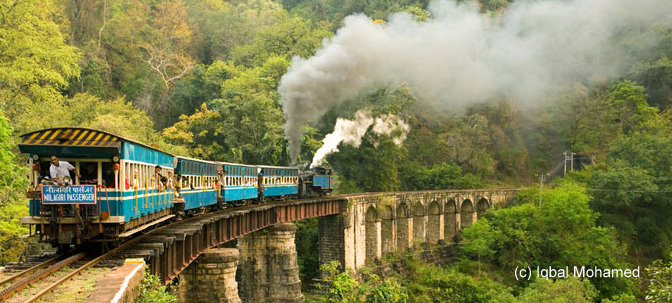
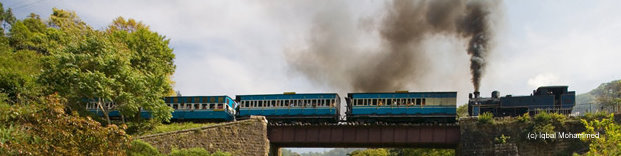

 Home
Home Open all
 Close all